Showing posts with label SM Foundation. Show all posts

Monday, April 22, 2024

Farming Futures


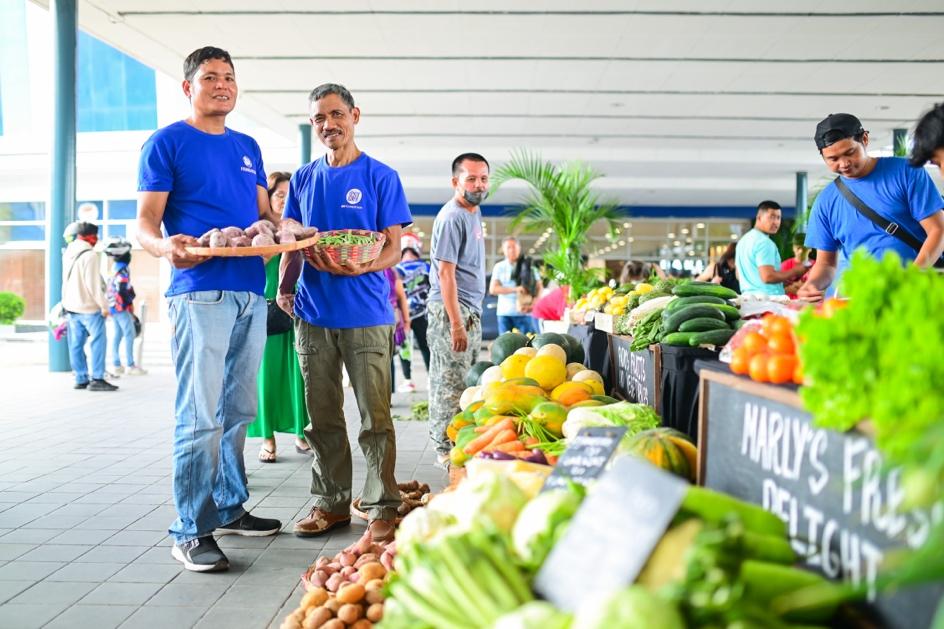
Jayson and Juanito proudly showcase a selection of produce at the SM City Clark’s Weekend Market.


While modern agricultural techniques boost yields for some, there remains several Filipino farmers who struggle to keep pace. These experienced hands find themselves falling behind in a market demanding higher production, clinging to familiar yet often inefficient methods passed down through generations.


One farmer from Pampanga, Jayson Garcia, sought to disrupt this prevailing narrative in his family. He knew that he had to chart a new course forward for his farm and innovate to remain competitive within the rapidly evolving landscape of modern agriculture.


“Noon, mahirap ang magtanim,” he recalled their life before joining SM Foundation’s Kabalikat sa Kabuhayan. “Para bang tsambahan, basta pag itinanim mo ‘yan, hintayin mo na lang mamunga. Mas mahirap pa lalo kapag nagkaroon ng kalamidad,” he added. 


SM Foundation’s training program focused on high-value crop cultivation was the breakthrough Garcia needed to revitalize his farming techniques. These included selecting the best seeds and caring for them as well as strategic planting schedules. 
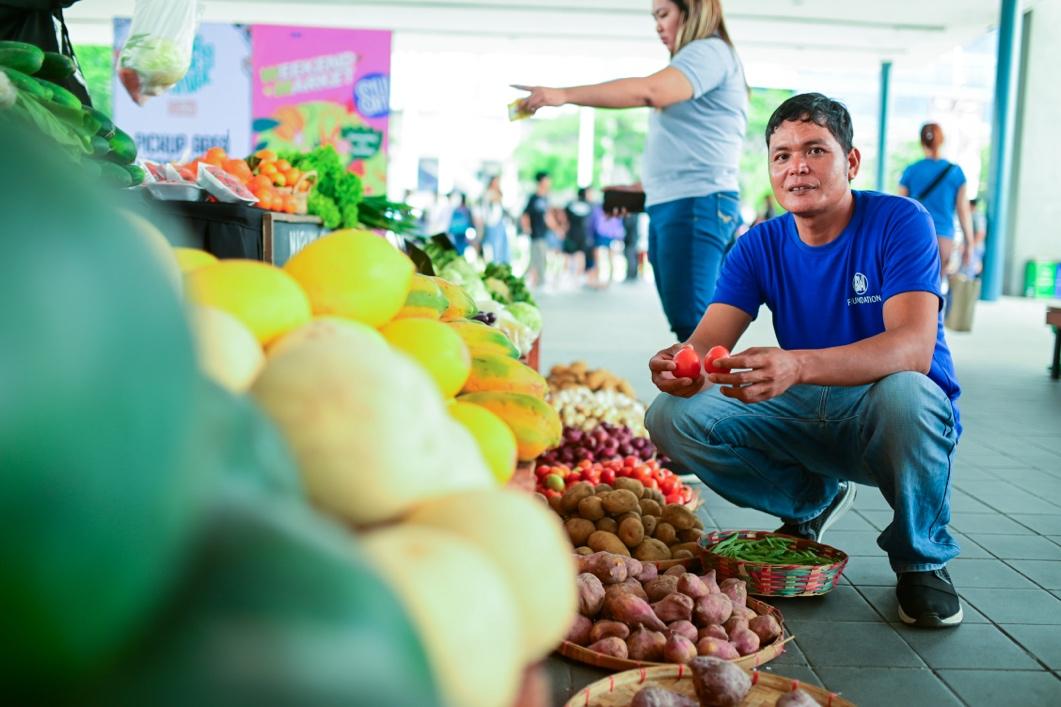

Jayson attends the SM City Clark’s Weekend Market to observe best practices and gain insights into new agricultural techniques.


The livelihood program also gave way for him to discover alternative sales channels that enhanced his earning potential while extending fair prices to his customers. The knowledge and confidence he gained led him to expand his farm, and in effect, increased his monthly income to more than Php25,000.


Aside from directly selling his harvests, he is now planting a variety of vegetables–on his farm, including lemongrass, malunggay, and madre de cacao, which he sells online to small businesses that process the produce into other products. 


Embracing new techniques

Sharing the same story of hope is another KSK farmer from Pampanga, Juanito Dela Cruz. Despite his age, he actively pursued and adopted modern farming techniques. Building on his current success, he shared the importance of adaptability for farmers, calling for others to try and explore new practices. 


From a modest monthly income of Php10,000, Juanito experienced an upsurge in his earnings, notably through participation in the Weekend Market at SM City Clark, yielding around Php30,000 weekly. “Kailangan maging bukas tayo sa makabagong pamamaraan ng pagsasaka para makahabol tayo sa demands ng panahon ngayon—ito ang itinuo sa akin ng SM Foundation-KSK,” he said. 
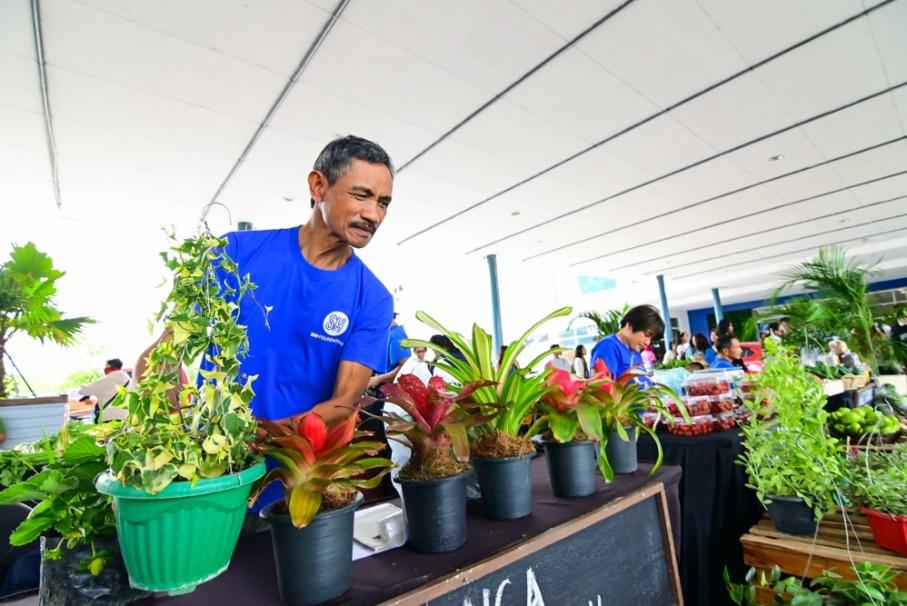

Juanito, alongside his wife, actively participates in the SM City Clark Weekend Market. They credit the market with contributing to their increased profitability.

The SM Group’s KSK program has changed the lives of roughly 30,000 Filipino farmers, including Jayson and Juanito. Through its initiatives, farmers who once lost hope have been able to embrace modern farming techniques, leading to adaptability in the face of the evolving agricultural landscape. 


The SM Group, through the SM Foundation, remains steadfast in its commitment to spreading social good. This dedication extends to SM’s forthcoming endeavors to be led by its future smart city property development – with a focus on enhancing positive social impact in the communities where SM operates.


Thursday, November 2, 2023

Expanding Sustainability: SM Foundation's 2nd Rainwater Harvesting System


Health workers in San Fernando, Cebu Primary Healthcare Facility water the locally sourced plants using the water from the rainwater harvesting system.


Rainwater harvesting is a way of collecting and storing rainwater for later use. It is an effective and adaptable way to conserve water and reduce reliance on main water supplies. Due to its efficacy, it has been applied by many civilizations in history and is being utilized today by forward-thinking institutions as a sustainable water management strategy.

SM group’s social good arm, SM Foundation, Inc. (SMFI), for one, has embraced this by installing rainwater harvesting systems in two of the local health centers it recently refurbished–Brgy. Irawan Birthing Facility in Puerto Princesa, Palawan, and San Fernando, Cebu Primary Health Care Facility. 

SMFI’s Health and Medical Programs proactively implemented this innovation to help sustain the health of the local community while preserving the environment.

Ready in times of emergency

Dr. Alfredo P. Manugas VI, Municipal Health Officer and Health Department Head of San Fernando, Cebu Primary Health Care Facility, said that while water is crucial to their operations, water supply is not always available in their municipality, even their center.

“The rainwater harvesting system is essential in our health facility because the water supply in our municipality is not available 24/7,” he said. “We are now provided a source of water in times of emergency or any interruption of water supply. Our staff and visitors can use rainwater for cleaning, flushing the toilet bowls, and watering the plants.”

SMFI Health and Medical Programs senior project manager Albert Uy runs through how the system functions.

SMFI ensures that the facility is convenient and manageable to maximize its purpose. It operates without electricity, increasing its sustainability. To harvest water for non-potable use, it collects rainwater from the roof and gutter. The water is filtered through vinyl-coated mesh filters to ensure its quality before being stored in the 800-liter storage tank.

To guide users for safe recycled water use, all faucets connected to the facility have visible labels. Alongside this innovation, SMFI also used air-cleaning paints, LED lighting fixtures and appliances, and locally sourced plants to create a clean and comfortable environment for patients and health workers.

These green innovations exemplify the SM group’s commitment to the environment and community health within the broader context of the SM Green Movement. With the social impact of the two rainwater harvesting systems, SMFI targets to replicate this initiative in other health centers in its pipeline, further improving water security in the face of challenges. 


Thursday, August 24, 2023

Coastal land reclamation: A glimpse into today’s urban development strategies

Coastal land reclamation is increasing and will continue to grow and be a popular urban strategy in places that experience urban growth.

According to a study, “Mapping 21st Century Global Coastal Land Reclamation,” that analyzed Landsat satellite images from 2000 to 2020 to quantify the spatial extent, scale, and land use of urban coastal reclamation of 135 cities globally with populations exceeding one million. Key findings indicate that 78% of these cities have turned to reclamation to create additional land, resulting in 253,000 hectares of new land, an area equivalent to Luxembourg.

Land reclamation is the process of creating new land from the sea. It’s often used in places with scarcity of land and high population density for many purposes. From Western Europe and West Africa to the Middle East, East Asia, and Southeast Asia, these countries’ cities reclaim lands for port extension, residential/commercial, and industrial purposes to create tourist and green spaces. Key drivers like global trade and rapid urbanization are already ubiquitous, so for the next step, these cities desire prestigious place-making efforts and enhanced international reputation.

“Coastal land reclamation is a forward-looking approach to urban development,” says Architect Ian Fulgar, the principal architect of Fulgar Architects. It allows cities to preserve valuable ecosystems and resources from urban sprawl by expanding spaces without encroaching on existing natural land. More importantly, it presents an opportunity for architects, urban planners, and modern city dwellers to have purpose-built urban environments specifically designed to meet their needs.

“Architects and urban planners can design sustainable and efficient infrastructure with a blank canvas, incorporating the latest technologies and best practices in urban planning. This approach can lead to more resilient and adaptive cities capable of mitigating the effects of climate change and other environmental challenges,” adds Architect Fulgar.

Cities that lead coastal land reclamation

Singapore, Dubai, and Hong Kong, says Architect Fulgar, are some of the world’s most notable cities with impressive urban reclamation projects. “Not only have they transformed their respective landscapes but also captured global attention,” he says.


Photo credit to Anastasia Yudin. An aerial shot of the Flower Dome in Singapore.

Singapore’s Marina Bay Sands and Gardens by the Bay are testaments to the city-state’s commitment to innovation and sustainability. The former is a luxury integrated resort famed for transforming Singapore’s coastline and city skyline, whereas the latter is a spectacularly unique horticultural destination that combines art, science, and nature. These reclaimed land developments further boost the country’s international reputation and real estate value.

For some parts of the United Arab Emirates, coastal land reclamation has significantly changed its geography. Dubai, which has completely transformed into an ultramodern city, features ambitious projects now known as some of the most recognizable developments in the world, like Palm Jumeirah and The World. “They have reshaped the coastline and established the city as a leader in innovative development, significantly elevating Dubai’s real estate value and worldwide interest,” says Architect Fulgar.

SM Foundation introduces rainwater harvesting for sustainable impact

In line with the SM Green Movement, the SM group, through the SM Foundation, recently established a rainwater harvesting system at the Brgy. Irawan Birthing Facility in Puerto Princesa City, Palawan. The initiative aims to strengthen its goal of preserving the environment and ensuring the health and wellness of future generations.

To enhance water conservation and management in the facility, the system collects rainwater from the roof and gutter, passing it through vinyl-coated mesh filters to help ensure water quality. With an 800-liter storage capacity, the harvested water serves the facility’s non-potable needs like watering plants, cleaning, and toilet flushing.

SMFI Health and Medical Programs Senior Project Manager Albert Uy inspects the water catchment to ensure its reliability.


The rainwater harvesting facility also operates without electricity and features labeled faucets for intuitive recycled water use.

Faucets connected to the rainwater catchment are duly marked to help guide the community.

Midwife Narcisa Jagmis, who leads the said birthing facility, said that the facility will help them reduce their reliance on the city’s water supply systems.

Midwife Narcisa Jagmis observes as the system collects rainwater from the gutters.

“Mahalagang hindi kami nawawalan ng tubig sa center, lalo na po pag nagsimula kaming magoperate bilang birthing clinic. Ngunit minsan po, walang dumadaloy na tubig at wala kaming mapagkukunan,” Jagmis shared.  

“Kaya napaka laking tulog po ng natural na tubig mula sa rainwater catchment system na. Madali namin itong naaccess upang gamiting panglinis o pandilig dahil konektado ito sa mga gripo. Ang tubig naman mula sa main line ay maitatabi namin para sa aming sterile operations,” she said.


.


Monday, July 24, 2023

A Founder’s Dream: Urban Farming and the SM Foundation


This Urban Farming initiative is led by the SM Foundation through its Kabalikat Sa Kabuhayan on Sustainable Agriculture Program (KSK-SAP). It’s about uplifting the farmer community, fostering environmental consciousness, food security, and creating livelihood and income opportunities for marginalized urban communities.


Through the KSK-SAP, strategically-located field schools offer a comprehensive program of urban farming techniques, product development, marketing, and basic accounting.

SM is in the business of creating a sustainable environment. From being the first to consider renewable energy in mall buildings, to implementing energy-saving devices, we continue to meet significant sustainability milestones. 

Join the commitment to a more sustainable lifestyle at smgreenmovement.com and #SMGreenMovement


Tuesday, May 23, 2023

SM group to build new school buildings in Laguna, Batangas

Continuing its commitment to helping elevate the country's education system, SM Foundation, Inc. (SMFI), in partnership with SM Prime Holdings, Inc. (SMPHI) and the Department of Education (DepEd), have recently collaborated to construct two new school buildings in Laguna and Batangas.

Upon the completion of the joint initiative, two two-story four-classroom school buildings will be donated to the Laguna Resettlement Community School in San Pedro City, Laguna and the San Antonio Elementary School in Sto. Tomas City, Batangas.

Each of the school buildings is set to be equipped with learning materials, armchairs, handwashing facilities, emergency equipment, and PWD-friendly facilities to ensure that students, especially from low-income communities, gain access to modern, safe, and conducive learning facilities.

Formalizing the partnership, representatives from the SMFI, DepEd, and the local government units of said provinces attended the memorandum of agreement signing last April 28, 2023, at the National Educators Academy of the Philippines (NEAP) in Malvar, Batangas.


SM Foundation, through its School Building Program, is an active partner of DepEd in various educational programs. This social good initiative aims to promote quality public education by building classrooms nationwide. To date, it has turned over more than 100 school buildings to grassroots communities.


Tuesday, November 29, 2022

SM provides learners with environment conducive to learning

 More than just an area where students gather to hold classes, a school environment plays a vital role in learners’ cognitive development. Research has shown that with an environment conducive to learning, students increase their attention and focus, and they are more motivated to practice higher-level critical thinking skills.

SM School building in General Santos City
Adamant to provide students with venues where they can fully hone their skills and knowledge, SM Foundation (SMFI)—the corporate social responsibility arm of the SM group—cemented its partnership with the Department of Education (DepED) in 2002 through DepEd’s Adopt-A-School Program.

Through this, SMFI builds SM school buildings in grassroots communities, complete with basic furniture and equipment. More so, SMFI integrates specialized features into each SM school building to address the unique needs of their school recipients—some received rooms dedicated as a guidance office, a clinic, and a mini-library, and some even got a water tank and a handwashing facility.

To date, SMFI has turned over more than 100 SM school buildings nationwide with the help of its partners, which share the same aspirations for Filipino learners and teachers. One of which is SM Prime Holdings (SMPH) - one of the largest integrated property developers in Southeast Asia. Since the project’s inception, over 90 SM school buildings out of the more than 100 were built through the social good collaboration with SM Prime.


Infrastructure for calamity-prone areas

SMFI and SMPH ensure that the SM school buildings incorporate a disaster-resilient design to guarantee the safety of the students, teachers, and other school personnel. Emergency lights at both staircases, and fire and earthquake alarm bells are also installed.

Principal Joji Buelvo, school principal of Basud Elementary School (BES) in Sorsogon City, shared the state of their school community before they accepted the fully furnished SM school building from SMFI and SM Prime in 2021: “Ang aming paaralan ay saksi sa maraming kalamidad. Kaya karamihan ng mga classrooms ay may kalumaan na, ang mga kisame ay malapit na bumagsak—talagang hindi na conducive for learning.”

Every classroom in an SM school building is well-ventilated and spacious enough to allow the students to have a better learning experience.
“But through your [SMFI and SM Prime] donation, our BES learners now have a haven where we can nurture their young minds to be academically-ready and well-rounded members of the community,” Buelvo further expressed. 

Addressing classroom shortage

The continuous rapid growth of the country’s population is taking a toll on schools—leaving the students, even the teachers, with overcrowded classrooms which affect learners’ academic performance.

In 2012, the Banisil National High School (BNHS) in General Santos City received its first SM school building. But being the only secondary school in Barangay Tambler, BNHS records a significant increase in their enrollment per year. With this challenge, SM Foundation decided to provide another edifice of hope for the sub-urban Muslim community in 2021, addressing the growing needs of BNHS learners and teachers.

BNHS then principal Shiela Balbon said, “Yung patuloy na paglobo ng population every year ay talagang naging suliranin namin.

Pagpasok ng 2020, nagkaroon ng COVID. So naisip ko baka hindi na matuloy. Pero itong SM Foundation, walang pande-pandemya sa kanila. Talagang desidido silang matugunan yung pangangailangan sa classroom ng mga estudyante,” she added.

“Our salute to our longtime partners, SM Foundation and SM Prime, for being so generous and proactive in providing us with school buildings that are conducive to learning. We are so grateful for your extended support to our school amidst the pandemic,” Balbon concluded.

SM Foundation, through its School Building Program, is an active partner of DepEd’s Adopt-a-School project. This social good initiative aims to promote quality public education by building classrooms nationwide.